Tendisha vs Leading Proposal Platforms: Why the Bid Decision Comes First
The proposal-software market includes excellent platforms for creating sales documents, reusing approved answers, coordinating enterprise response teams and producing polished client-facing proposals.
But tendering presents a broader problem.
Before a company writes a single proposal section, it must understand the tender, test its eligibility, assess commercial and delivery risk, compare the requirements with its real capabilities and decide whether the opportunity deserves the investment.
That is the problem Tendisha was designed to address.
Tendisha does not begin with the document. It begins with the decision.
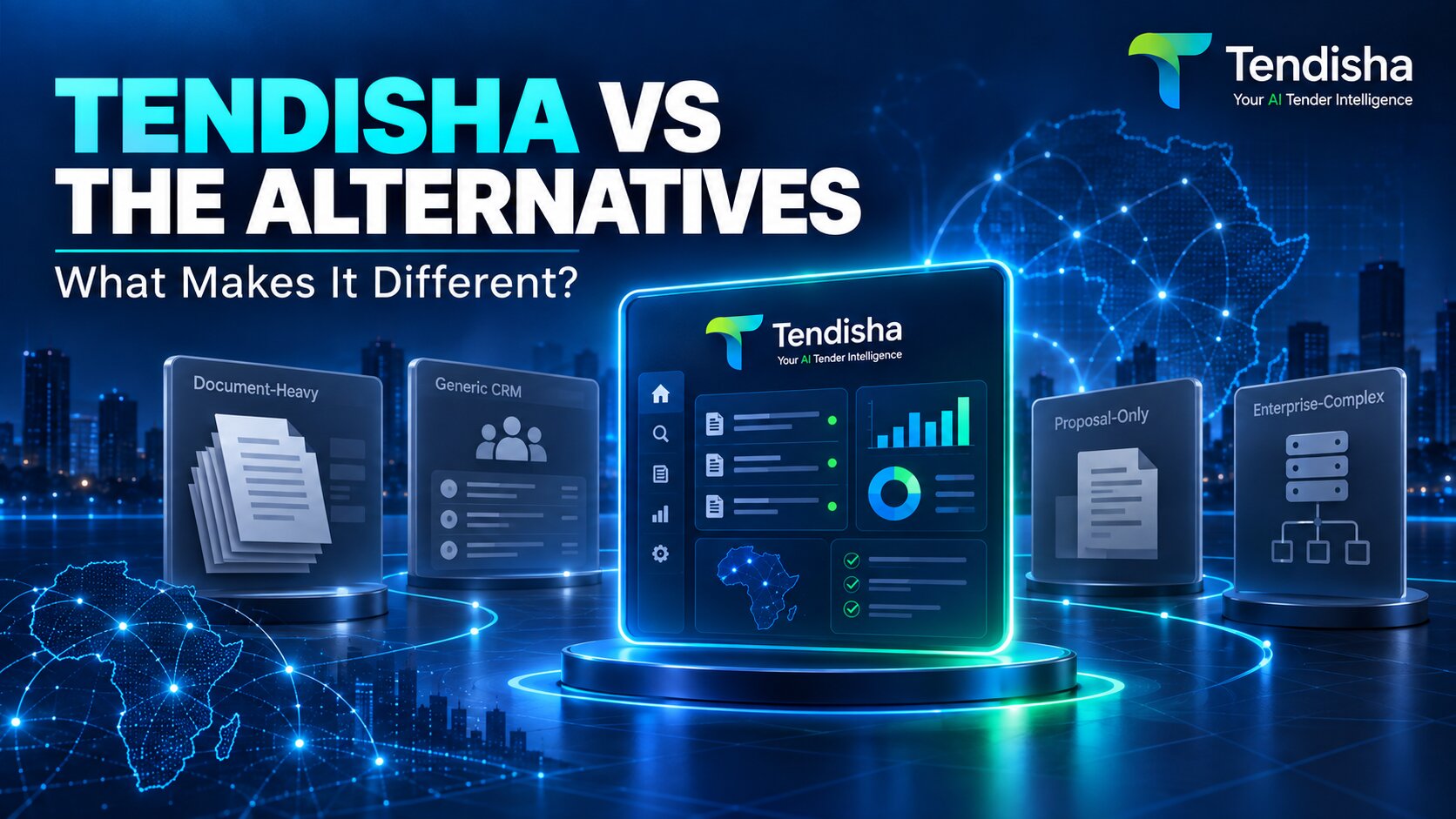
This article compares Tendisha with several recognised platforms—Loopio, Responsive, QorusDocs, PandaDoc and Proposify—and explains how their different product philosophies serve different kinds of teams.
> Important: This is a comparison of publicly described product focus, not a claim that one platform is universally better. Features, packaging and integrations change over time. Buyers should verify current capabilities directly with each provider.
The short version
The platforms in this comparison broadly fall into three categories:
1. Enterprise RFP and response management: Loopio and Responsive.
2. Proposal automation within established sales and productivity ecosystems: QorusDocs.
3. Sales proposal creation, delivery, tracking and signature: PandaDoc and Proposify.
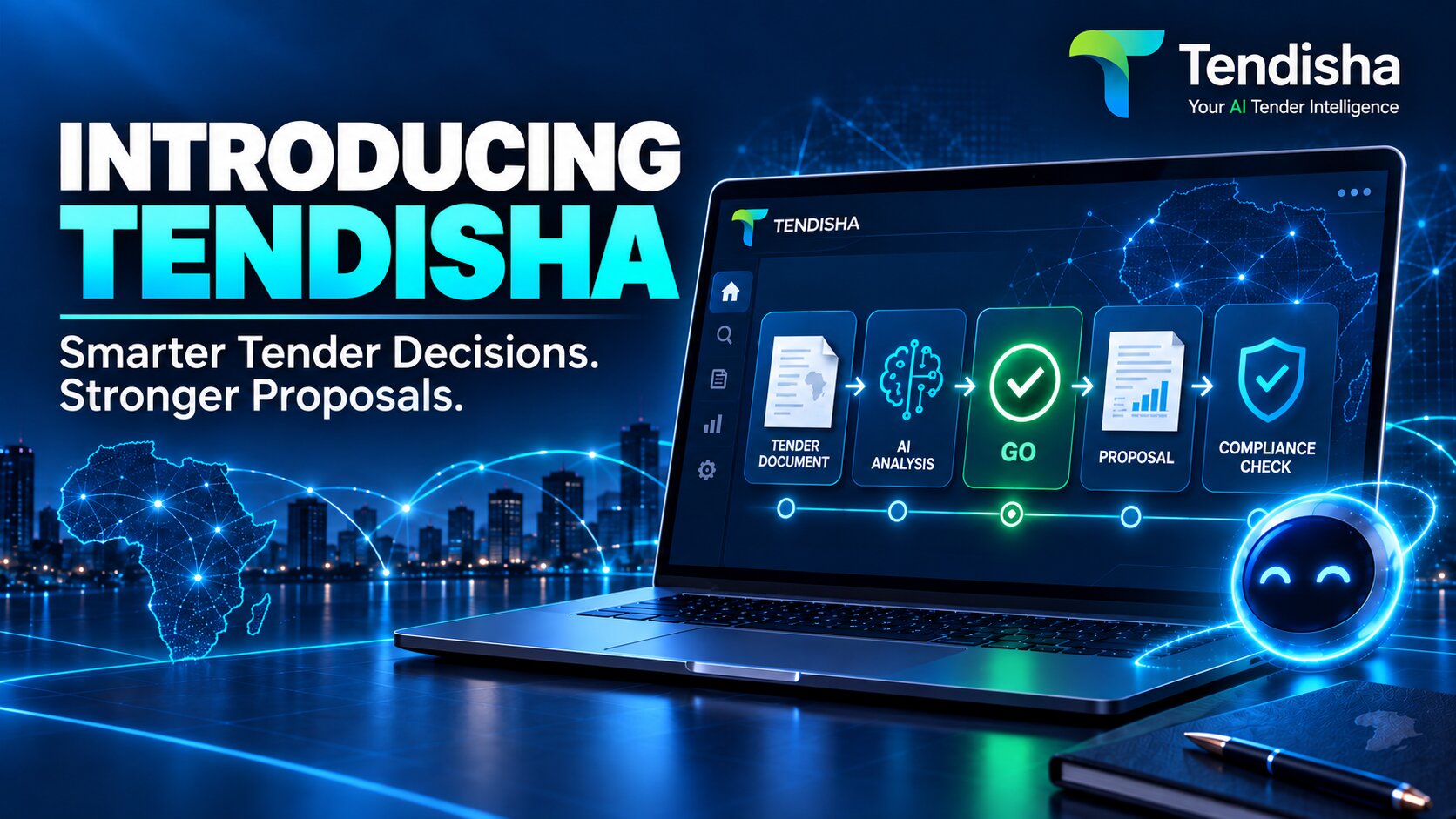
Tendisha occupies a different position: tender decision intelligence and proposal preparation in one connected workflow, built to help growing businesses determine whether to bid, understand the tender, organise their evidence, prepare a grounded response and check it against the requirements.
Comparison at a glance
Platform | Primary public focus | Particularly strong for | How Tendisha differs |
Tendisha | Tender analysis, Go/No-Go assessment, company-fit reasoning, grounded proposal preparation and tender-linked compliance | SMEs and growing teams that need help from opportunity assessment through proposal preparation | Begins before proposal writing and keeps the tender, company evidence, decision and response connected |
Loopio | Enterprise RFP response management, approved-answer libraries, collaboration and response automation | Mature response teams handling recurring RFPs, RFIs, questionnaires and due-diligence requests | Tendisha places more emphasis on evaluating the opportunity and company fit before the response begins |
Responsive | Strategic response management across complex questionnaires and enterprise response workflows | Large organisations coordinating high-volume responses across experts and systems | Tendisha is designed as a focused tender workflow that can be adopted by smaller teams without building an enterprise response operation |
QorusDocs | AI-assisted proposals, pitches, RFP responses and business cases within Microsoft 365 | Professional-services and sales teams deeply invested in Word, PowerPoint and Microsoft workflows | Tendisha centres the tender itself, Go/No-Go reasoning and structured company evidence rather than primarily extending document-production tools |
PandaDoc | Sales proposals, quotes, contracts, pricing, tracking and electronic signatures | Sales teams that need attractive documents and a digital close workflow | Tendisha focuses on competitive tender requirements and bid readiness rather than recipient engagement and electronic agreement execution |
Proposify | Branded proposals and quotes from creation through tracking and signature | Sales organisations seeking control, visibility and repeatable proposal presentation | Tendisha is organised around tender eligibility, risk, evidence and compliance—not only the sales document and close process |
Tendisha and Loopio
Loopio is a well-established RFP response platform. Its public product materials emphasise a central library of approved company content, response automation, collaboration and governance across RFPs, RFIs, security questionnaires and other high-stakes business responses. Loopio describes its approach as combining AI with a curated content library, approval workflows, collaboration tools and audit controls.
This is valuable for organisations that already respond to large volumes of structured questions and need many subject-matter experts to contribute consistent, approved answers.
Tendisha approaches the workflow from an earlier point.
Before asking, “What approved answer should we use?”, Tendisha asks:
- Is the company eligible?
- Does it have relevant experience?
- Are the required personnel and certifications available?
- Is the opportunity financially proportionate?
- What evidence exists, and what remains uncertain?
- What are the risks of bidding?
- Should the business invest in this opportunity at all?
For a large enterprise with a mature proposal department and an extensive answer library, Loopio’s scale and response-management specialisation may be the natural fit. For a growing company that needs to improve both bid selection and proposal preparation, Tendisha offers a more tender-centred starting point.
Tendisha and Responsive
Responsive positions itself as an AI-powered strategic response-management platform. Its focus is broad enterprise response work: RFPs, questionnaires, complex information requests and collaboration across distributed experts.
That makes sense for organisations in which response management is already a specialised function. Large companies may need extensive integrations, granular workflows, permissions and content governance across multiple departments.
Tendisha is deliberately more focused.
It is intended to make disciplined tendering accessible to businesses that may not have a dedicated bid department, enterprise content-management team or full-time proposal operations staff. A user can move through a recognisable tender journey:
1. Create or upload the opportunity.
2. Analyse the tender document.
3. Run a company-specific Go/No-Go assessment.
4. Identify evidence and unresolved gaps.
5. Prepare the proposal.
6. Check the response against the linked tender requirements.
Responsive and Tendisha therefore overlap in AI-assisted response work, but they are optimised around different operating environments. Responsive publicly presents a broad enterprise response layer. Tendisha provides a focused tender workflow designed to guide a growing business through the decision and preparation process.
Tendisha and QorusDocs
QorusDocs focuses on AI-assisted proposals, RFP responses, pitches and business cases. A major differentiator is its Microsoft 365 orientation: it helps teams work with approved content, company experience, biographies and proposal material inside familiar tools such as Word and PowerPoint.
That is especially attractive to professional-services, legal, architecture, engineering, construction and technology organisations whose proposal production already revolves around Microsoft documents.
Tendisha shares QorusDocs’ belief that proposals should use real organisational knowledge rather than generic text. Both approaches recognise the importance of experience, team credentials and approved company information.
The difference is emphasis.
QorusDocs extends sophisticated proposal and pursuit work within established productivity and sales environments. Tendisha builds a dedicated tender workspace in which the following remain connected:
- the original opportunity;
- extracted tender requirements;
- the analysis;
- the Go/No-Go decision;
- the company profile and dossier;
- personnel, credentials and past projects;
- proposal sections; and
- compliance findings.
For a firm that wants deep Microsoft-based proposal automation, QorusDocs may be compelling. For a business that wants a guided tender lifecycle beginning with qualification and risk assessment, Tendisha offers a different route.
Tendisha and PandaDoc
PandaDoc is a broad document platform built around sales proposals, quotes, contracts and other commercial documents. Its official proposal-software page highlights templates, drag-and-drop document creation, pricing tables, approval workflows, document analytics, CRM integrations and legally binding electronic signatures.
PandaDoc is therefore particularly strong after a seller already knows it wants to pursue the deal. It helps create a polished document, deliver it to the recipient, monitor engagement and obtain a signature.
Competitive tendering is different from a conventional sales proposal.
The procuring entity normally defines the format, mandatory conditions, evaluation method and submission instructions. The bidder may have little control over the document experience, and an electronic signature workflow may not be the central problem.
Tendisha focuses instead on questions such as:
- What exactly is mandatory?
- Does the bidder meet the eligibility conditions?
- Which company projects are relevant?
- Which personnel satisfy the tender’s role requirements?
- What evidence supports each claim?
- Which requirements are missing or only partially addressed?
PandaDoc is an excellent example of sales-document technology. Tendisha is purpose-built around tender qualification and response readiness.
Tendisha and Proposify
Proposify describes its platform as a way to create, track and sign professional, branded proposals and quotes. It highlights workflow automation, team collaboration, a drag-and-drop editor, CRM integrations, real-time engagement insights and electronic signatures.
That makes Proposify valuable for sales organisations seeking brand consistency, visibility and control from proposal creation to close.
Tendisha’s centre of gravity is different. It is less concerned with whether a prospect spent three minutes viewing a pricing page and more concerned with whether the bidder has supplied the required personnel, certification, methodology, evidence and mandatory documentation.
The distinction is not that one kind of proposal is more important. It is that a negotiated sales proposal and a formal tender response are governed by different risks.
Proposify is designed to help sales teams present and close. Tendisha is designed to help bid teams qualify, understand, prepare and check.
What makes Tendisha stand out?
1. The Go/No-Go decision is a first-class workflow
Many proposal tools begin after the organisation has already chosen to respond.
Tendisha treats bid selection as a core business decision. Its analysis connects the opportunity with company capabilities, personnel, credentials, experience, financial position and supporting evidence. The recommendation is accompanied by reasons, risks and unresolved questions—not merely a score.
This matters because the cheapest tender to lose is often the one the company wisely decides not to pursue.
2. The tender document remains the source of the workflow
Tendisha is not simply a document editor with AI added. The tender is analysed for eligibility, deadlines, deliverables, evaluation criteria, personnel requirements, certifications, submission instructions and other obligations.
That structured tender context can then inform the decision, proposal and compliance check.
3. Company evidence is organised for reuse
Tendisha brings together the company profile, dossier, personnel, credentials, certifications and past projects. This gives proposal generation a factual base and helps users identify whether a claim is verified, merely stated or still unsupported.
The objective is not to generate confident-sounding fiction. It is to help the business use what it genuinely knows and expose what it still needs.
4. Proposal content is grounded in both sides of the bid
Strong tender responses sit at the intersection of two bodies of information:
- what the buyer requires; and
- what the bidder can prove.
Tendisha is built to bring those two sides together. The linked opportunity provides the tender context. The company profile and dossier provide the bidder context. Proposal sections can then be drafted and improved using both.
5. Compliance is linked to the actual tender
A generic writing-quality check cannot determine whether a proposal addresses a mandatory requirement.
Tendisha’s compliance workflow evaluates the response against the requirements associated with the linked opportunity. It can distinguish between requirements that appear addressed, partially addressed, missing, not applicable or in need of human verification.
That produces a practical action list rather than a misleading blanket assurance.
6. It is designed for growing businesses
Enterprise response platforms can be extremely powerful, but their greatest strengths often emerge in organisations with mature processes, extensive approved-answer libraries, dedicated proposal professionals and multiple integrated systems.
Tendisha is designed for companies that need discipline without unnecessary complexity. It helps a smaller team establish a repeatable tender process and gradually build institutional knowledge from every opportunity.
7. It reflects the realities of African tendering
Tendisha is being developed with African businesses and procurement environments firmly in view. Growing firms across the continent frequently pursue government, development-sector and private procurement opportunities while operating with lean bid teams and fragmented company evidence.
The product’s focus on readiness, eligibility, credentials, supporting documents, company capacity and explicit evidence gaps reflects those realities.
This regional grounding does not limit Tendisha to Africa. It gives the platform a clear starting point: solve the practical tendering problems faced by businesses that have historically been underserved by large enterprise software.
Which platform should you choose?
Choose according to the problem your team actually needs to solve.
Consider Loopio or Responsive if:
- you manage high volumes of RFPs, questionnaires and recurring response content;
- you have a mature enterprise response operation;
- extensive collaboration, content governance and integrations are central requirements.
Consider QorusDocs if:
- proposal production is deeply embedded in Microsoft 365;
- your firm creates complex pitches, business cases and professional-services proposals;
- you need strong document automation using governed company content.
Consider PandaDoc or Proposify if:
- you primarily create sales proposals, quotes and commercial documents;
- attractive presentation, recipient tracking and electronic signatures are priorities;
- the opportunity has already been qualified through another process.
Consider Tendisha if:
- your team needs help deciding which tenders to pursue;
- tender requirements are difficult to interpret and organise;
- company evidence is scattered across people and files;
- proposals must be grounded in real personnel, projects and credentials;
- you want compliance checking tied to the actual opportunity;
- you need an accessible workflow from tender analysis to proposal preparation.
The Tendisha difference
Tendisha is not trying to be another generic proposal editor or to imitate every feature of an enterprise response suite.
Its difference is the connection between decision intelligence and proposal execution.
The platform helps a business answer five connected questions:
1. What does this tender require?
2. Should we bid?
3. What can we credibly offer and prove?
4. How should we structure the response?
5. What remains missing before submission?
That connected view is what turns tendering from a last-minute writing exercise into a repeatable business process.
Stop chasing every tender. Focus on the opportunities your business can truly win.
Explore Tendisha →